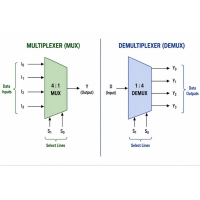
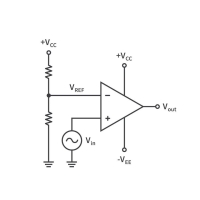
Oscillators and clock generators are important timing components used in modern electronic systems. This article explains the difference between an oscillator and a clock generator, how they work together, and how reference clocks, system clocks, crystal oscillators, and PLL clock generators are used in digital electronics. It also covers frequency stability, phase noise, clock jitter, common timing problems, and the applications of oscillators and clock generators in computers, communication systems, FPGA circuits, and embedded devices.
Catalog
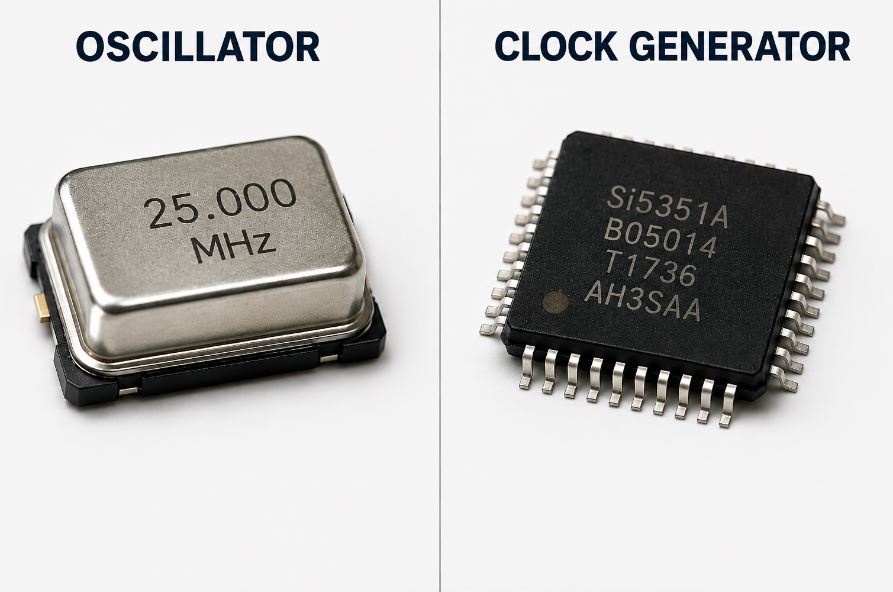
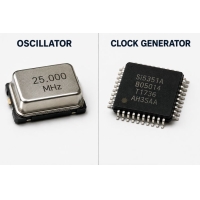
Figure 1: Oscillators and Clock generators
An oscillator is an electronic component that generates a stable and continuous timing signal used to control the timing of electronic circuits. It creates a fixed-frequency signal that serves as the main reference clock in devices such as microcontrollers, communication systems, and digital electronics. Common types include crystal oscillators, RC oscillators, LC oscillators, and MEMS oscillators, with crystal oscillators being widely used because of their high frequency stability and accuracy.
A clock generator is a timing device that creates and distributes multiple clock signals throughout an electronic system using a reference signal from an oscillator. Unlike an oscillator, which mainly produces one stable frequency, a clock generator manages different clock frequencies required by processors, memory devices, FPGAs, and communication circuits.
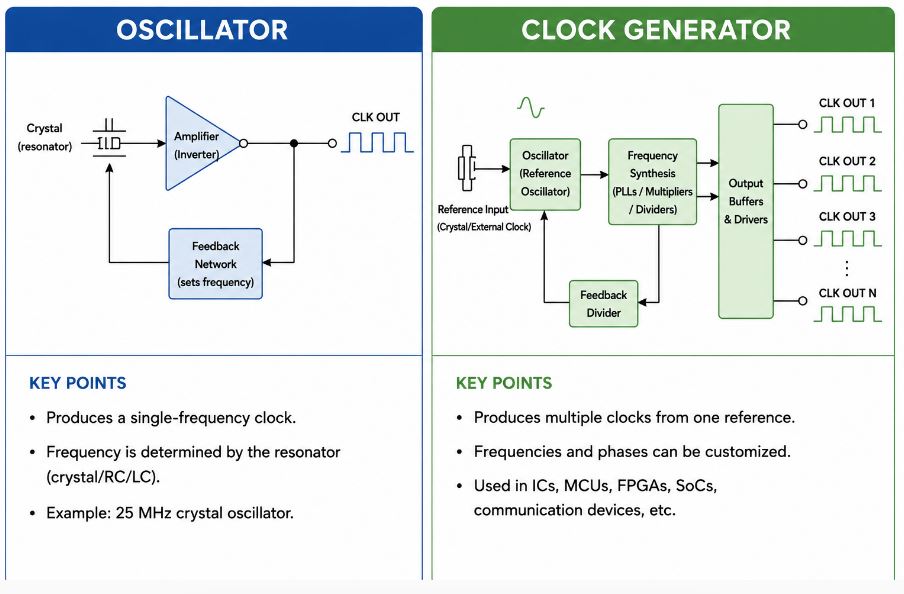
Figure 2: Working Principle of Oscillators and Clock Generators
Oscillators and clock generators work together to create the timing signals used in modern electronic systems. An oscillator generates a continuous clock signal at a stable frequency that acts as the main reference clock for the circuit. Crystal oscillators are commonly used because they provide accurate timing, stable frequency output, and low clock jitter.
A clock generator receives the reference signal from the oscillator and creates multiple synchronized clock outputs for different parts of the system. Many clock generators use PLL circuits to increase, divide, or adjust clock frequencies based on system requirements. This allows components such as CPUs, RAM, PCIe devices, and communication interfaces to operate at different clock speeds while remaining properly synchronized.
For example, in a computer motherboard, a crystal oscillator may provide the main reference frequency while the PLL clock generator creates separate clock signals for the CPU, RAM, PCIe interface, and USB controller. Together, oscillators and clock generators provide the stable timing control required in modern digital electronics.
Feature
|
Oscillator
|
Clock
Generator
|
Main Function
|
Generates a
stable reference clock signal
|
Creates and
distributes multiple clock signals
|
Clock Output
|
Usually
provides a single fixed-frequency output
|
Can provide
multiple synchronized clock outputs
|
Frequency
Control
|
Mostly fixed
frequency
|
Supports
frequency multiplication and division
|
PLL Usage
|
Usually does
not use PLL circuits
|
Commonly uses
PLL circuits
|
Main Focus
|
Frequency
stability and low jitter
|
Clock
management and synchronization
|
Complexity
|
Simpler
circuit design
|
More complex
timing architecture
|
Flexibility
|
Limited
frequency adjustment
|
Highly
flexible clock configuration
|
Common Use
|
Reference
timing source
|
System-wide
clock distribution
|
Typical
Applications
|
Crystal
oscillators, embedded systems, RTC circuits
|
CPUs, FPGAs,
motherboards, PCIe, communication systems
|
Cost
|
Generally
lower cost
|
Usually
higher cost
|
Relationship
in Systems
|
Provides the
original timing reference
|
Uses the
oscillator reference to generate system clocks
|
Feature
|
Reference
Clock
|
System Clock
|
Main Function
|
Provides a
stable timing reference
|
Controls the
operating speed of the system
|
Purpose
|
Used for
synchronization and frequency reference
|
Used for
actual data processing and operations
|
Frequency
Stability
|
Very high
stability and low jitter
|
Depends on
the reference clock and PLL design
|
Frequency
Type
|
Usually fixed
frequency
|
Can operate
at different or higher frequencies
|
Signal Source
|
Commonly
generated by a crystal oscillator
|
Often
generated from the reference clock using PLL circuits
|
Main Focus
|
Timing
accuracy and synchronization
|
System
performance and operation speed
|
Typical
Frequency
|
Commonly 25
MHz, 50 MHz, or 100 MHz
|
May range
from MHz to several GHz
|
System Role
|
Supports PLLs
and clock generators
|
Drives CPUs,
RAM, buses, and digital circuits
|
Flexibility
|
Limited
frequency adjustment
|
More flexible
and adjustable
|
Signal
Quality Importance
|
Critical for
low jitter and stable timing
|
Important for
reliable system operation
|
Common
Applications
|
PLL circuits,
communication systems, clock synchronization
|
Processors,
memory systems, FPGAs, motherboards
|
Relationship
in Systems
|
Provides the
timing foundation
|
Uses the
reference clock for system operation
|
Feature
|
Crystal
Oscillator
|
PLL Clock
Generator
|
Frequency
Output
|
Usually fixed
frequency
|
Adjustable
and flexible frequencies
|
Timing
Stability
|
Very high
frequency stability
|
Depends on
reference clock quality
|
Clock Jitter
|
Lower jitter
|
Higher jitter
due to PLL operation
|
Phase Noise
|
Lower phase
noise
|
May introduce
additional phase noise
|
PLL Usage
|
Does not
require PLL
|
Uses PLL
circuits for frequency control
|
Frequency
Control
|
Limited
adjustment
|
Can multiply
or divide frequencies
|
Signal
Quality
|
Cleaner and
more stable output
|
More flexible
but may add timing noise
|
Typical
Applications
|
Microcontrollers,
RTCs, embedded systems
|
CPUs, FPGAs,
RAM, PCIe, communication systems
|
Why Frequency Stability Matters in Clock Signals
Frequency stability is important because digital systems depend on accurate timing signals to operate correctly. A stable clock signal maintains the same frequency even when temperature, voltage, or operating conditions change. If the frequency drifts too much, processors, communication circuits, and digital interfaces may lose synchronization and experience timing errors. Crystal oscillators are widely used in electronic systems because they provide high frequency stability, low drift, and reliable long-term timing performance.
How Phase Noise Affects Signal Quality
Even when a clock signal maintains a stable frequency, unwanted electrical noise can still affect signal quality. This effect is known as phase noise, which appears as small frequency variations around the main clock signal. High phase noise reduces signal purity and can interfere with RF communication systems, wireless devices, and high-speed data transmission circuits. Because of this, low phase noise clock sources are important in applications that require clean and accurate timing signals.
Why Clock Jitter Causes Timing Problems
Clock jitter refers to small timing variations in a clock signal over time. Instead of switching at perfectly equal intervals, the clock signal may shift slightly earlier or later than expected. These timing variations can disrupt synchronization between processors, memory devices, and communication interfaces. Excessive clock jitter may cause unstable system operation, data corruption, communication failures, and reduced signal integrity in high-speed electronic systems.
Clock and
Oscillator Problem
|
Description
|
Common
Effects
|
Excessive
Clock Jitter
|
Timing
instability in the clock signal
|
Communication
errors, unstable synchronization, reduced signal integrity
|
Clock Skew
|
Clock signals
arrive at different devices at different times
|
Timing
mismatch, unstable processor operation, incorrect data processing
|
High Phase
Noise
|
Electrical
noise affecting clock signal purity
|
Poor signal
quality, RF interference, communication problems
|
Poor Clock
Distribution
|
Improper
routing of clock signals across the system
|
Timing
instability, synchronization failure, clock delay
|
Oscillator
Startup Failure
|
Oscillator
cannot generate a stable clock signal after power-up
|
System boot
failure, processor not operating correctly
|
Frequency
Drift
|
Oscillator
frequency changes due to temperature or voltage variations
|
Timing
inaccuracies, synchronization errors
|
PCB Layout
Problems
|
Poor routing,
grounding, or impedance control in PCB design
|
Noise, signal
reflections, unstable clock signals
|
Power Supply
Noise
|
Electrical
noise and unstable voltage affecting clock circuits
|
Increased
jitter, phase noise, unstable timing performance
|
Signal
Integrity Issues
|
Clock signals
become distorted during transmission
|
Data
corruption, unreliable high-speed communication
|
Improper Load
Capacitance
|
Incorrect
capacitor values connected to crystal oscillators
|
Startup
instability, inaccurate oscillator frequency
|
Oscillator Applications
• Computer Motherboards — Crystal oscillators provide stable reference clock signals for CPUs, RAM modules, PCIe interfaces, and other digital components.
• Microcontrollers and Embedded Systems — Oscillators generate accurate timing signals for instruction execution, sensor communication, and real-time processing.
• Wireless Communication Systems — RF oscillators are used for carrier signal generation and frequency control in wireless communication circuits.
• Consumer Electronics — Smartphones, tablets, televisions, and gaming systems use oscillators to synchronize processors, displays, and multimedia functions.
• Automotive Electronics — Oscillators help maintain stable timing in engine control units (ECUs), sensors, and automotive communication systems.
• Industrial Automation Systems — High-stability crystal oscillators are used in PLCs, robotics systems, and industrial control equipment for reliable synchronization.
Clock Generator Applications
• Processors and High-Speed Computing Systems — PLL clock generators create multiple synchronized clock frequencies for CPUs, GPUs, RAM, and high-speed buses.
• FPGA and Digital Logic Systems — Clock generators provide different clock domains and synchronized timing signals for FPGA operations and digital circuits.
• Ethernet and Networking Equipment — Low-jitter clock generators maintain synchronization in routers, switches, servers, and communication hardware.
• PCIe and High-Speed Interfaces — Clock generators manage clock distribution for PCIe, SATA, USB, and other high-speed communication standards.
• Data Communication Systems — Clock generators help maintain accurate timing and synchronization in telecom and networking infrastructure.
• Audio and Video Processing Systems — Clock generators synchronize multimedia signals and digital processing circuits for stable audio and video performance.
Oscillators generate stable reference clock signals, while clock generators create and distribute synchronized clock frequencies throughout an electronic system. Crystal oscillators provide accurate and stable timing, while PLL clock generators offer flexible clock control for processors, memory devices, FPGAs, and communication circuits. Stable timing is important because problems such as clock jitter, phase noise, clock skew, and frequency drift can affect synchronization and system performance. Together, oscillators and clock generators help maintain reliable operation in modern digital electronics.
Поделиться этим постом